
Examination of Patients Presenting to the Emergency Department as “Apparently Drunk”
Explore my academic poster examining alcohol-related presentations to Mercy University Hospital’s Emergency Department between 2022 and 2023. This study provides valuable insights into the healthcare burden of alcohol-related incidents.
This poster was presented at the Faculty of Public Health Medicine Winter Scientific Meeting on 4 December 2024.
Key Highlights
“Apparently drunk” refers to patients who present to the ED clearly intoxicated due to problems or injuries resulting from alcohol consumption.
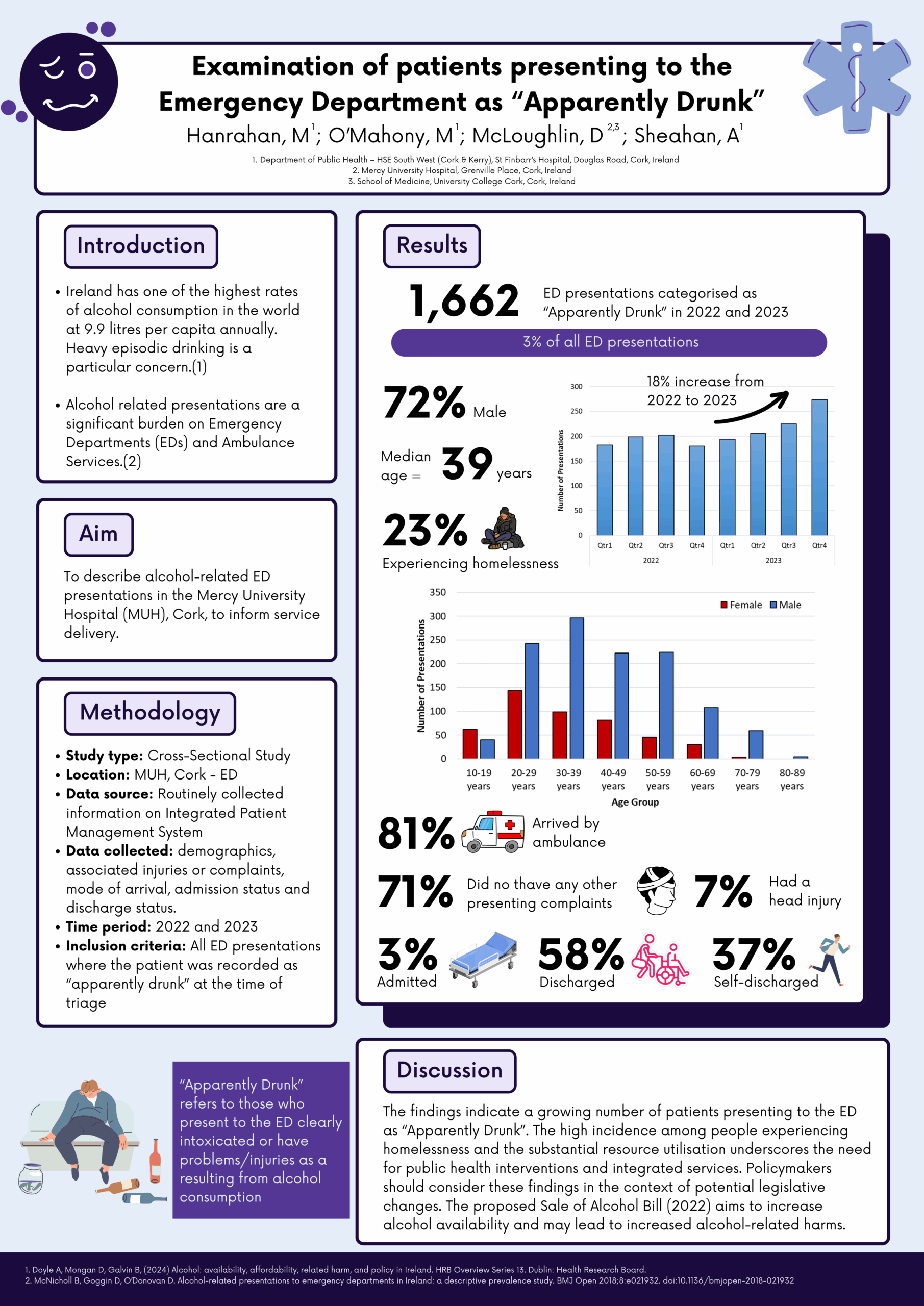
In 2022 and 2023, 1,662 patients were categorised as “apparently drunk”, representing 3% of all ED presentations with an 18% increase from 2022 to 2023.
The majority were male (72%) with a median age of 39 years. Notably, 23% experienced homelessness and 81% arrived by ambulance. Associated conditions included head injuries (7%) and mental health issues (5%).
Most patients (71%) had no other presenting complaint beyond alcohol intoxication. Only 3% were admitted to hospital, whilst 58% were discharged and 37% self-discharged.
Study Design
This cross-sectional study analysed data from the Integrated Patient Management System at Mercy University Hospital, examining all “apparently drunk” presentations during 2022-2023. Data included demographics, injuries, arrival mode, and discharge status.
Why This Matters
Ireland has one of the world’s highest alcohol consumption rates at 9.9 litres per capita annually1. Heavy episodic drinking ranks eighth globally1. Alcohol-related presentations represent a significant burden on emergency services, with approximately 6% of all presentations being alcohol-related.
The findings indicate growing alcohol-related ED presentations. The high incidence among homeless populations and substantial ambulance utilisation underscore the need for targeted public health interventions.
Research from other Irish hospitals supports these findings, with national studies showing 5.9% of ED presentations are alcohol-related, and 57.1% arrive by ambulance
Public Health Implications
These findings have important implications for healthcare planning and policy development. The substantial burden on emergency services highlights the need for comprehensive alcohol policies and interventions addressing both alcohol misuse and housing instability.
The high self-discharge rate (37%) suggests opportunities for improving care pathways and reducing repeat presentations. Healthcare providers should recognise the complex medical and social needs of this population.